Christmas Holidays

    nov god

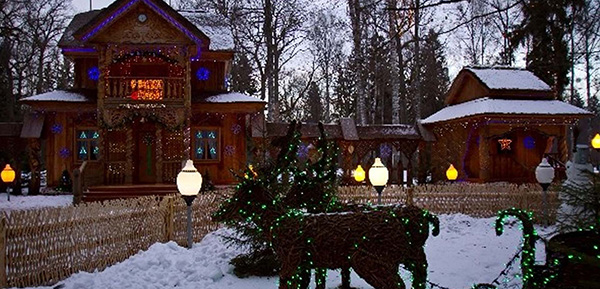
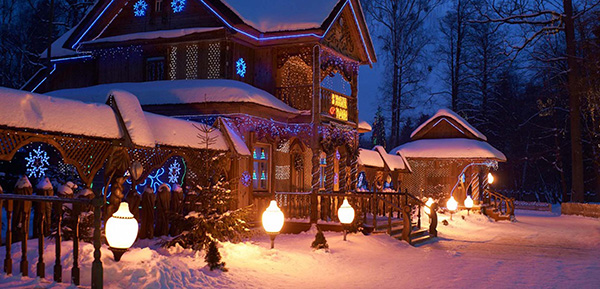
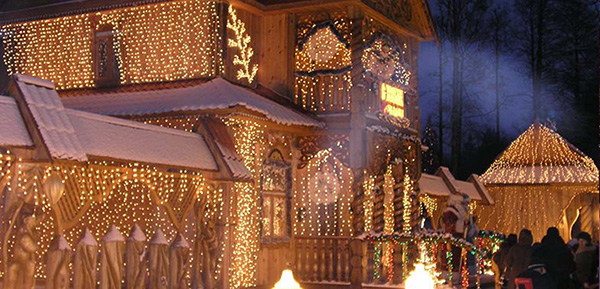
    Father Frost’s Residence
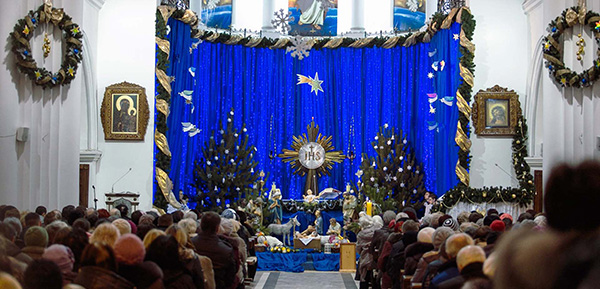
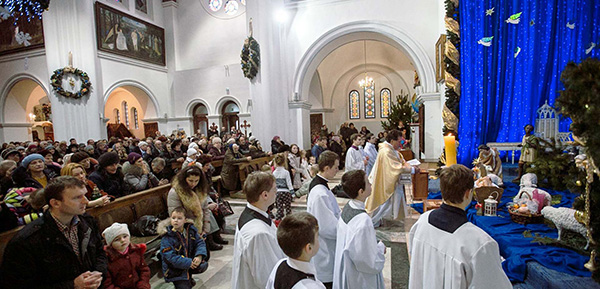
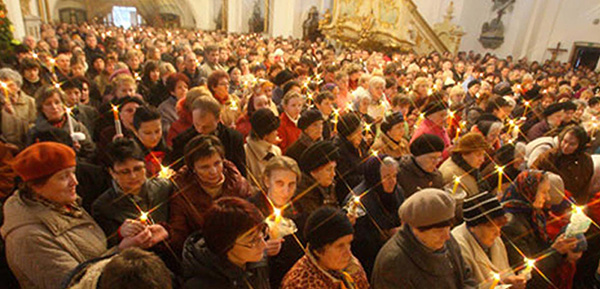
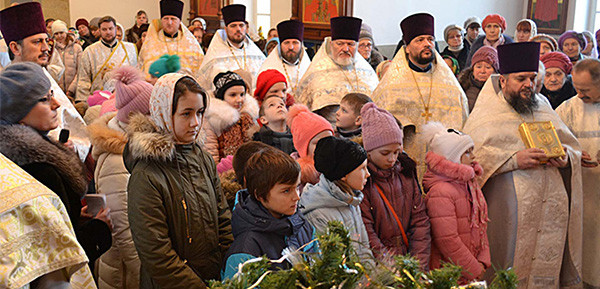
    Christmas Eve in churches
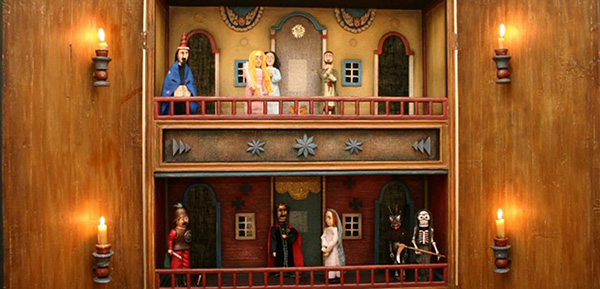
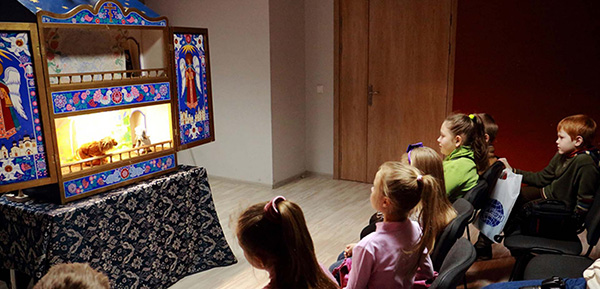
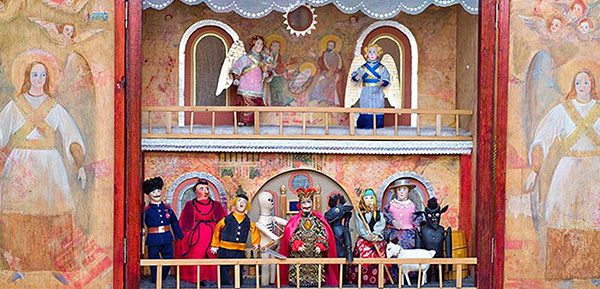
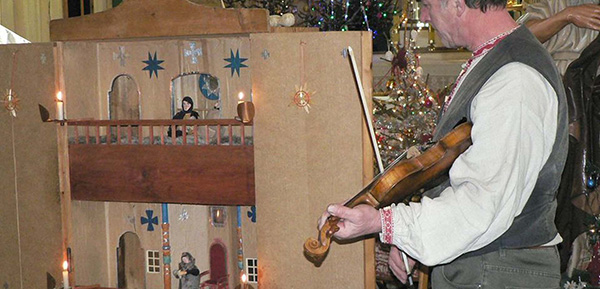
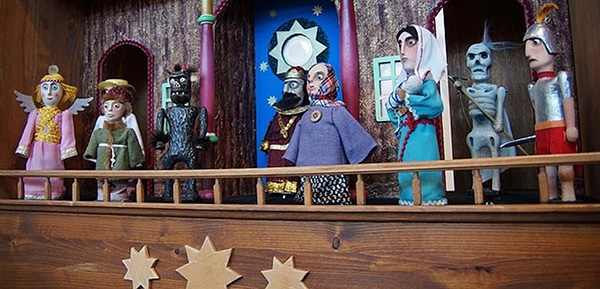
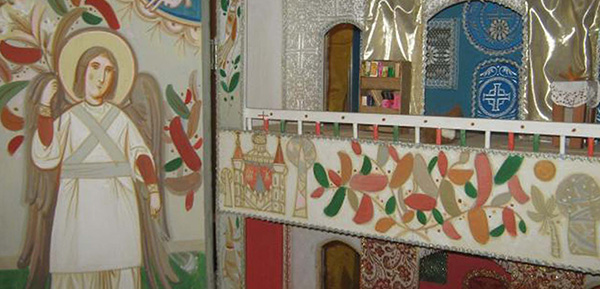
    The Bathleyka Theatre traditions
    Christmas Entertainment
    Ski Resorts
    Belarusian Christmas Souvenirs

    How Christmas is celebrated in Belarus
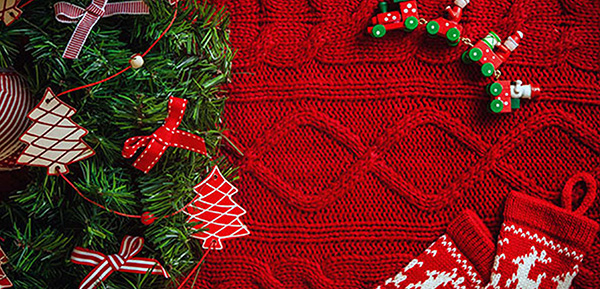
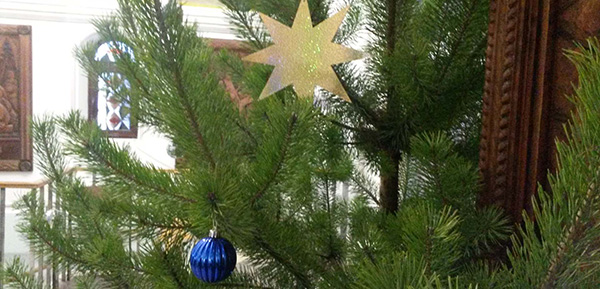
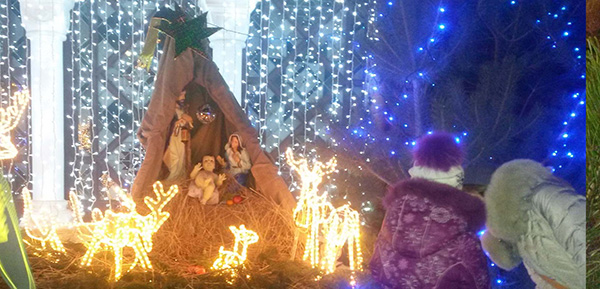
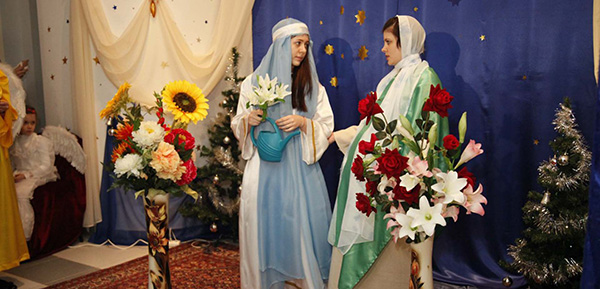
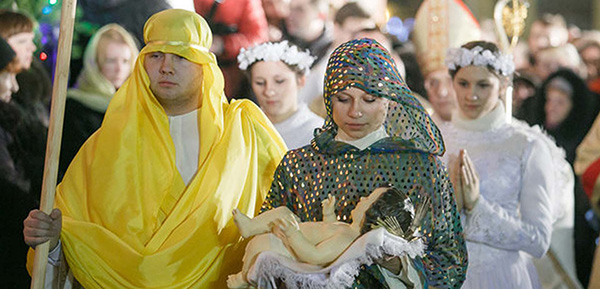
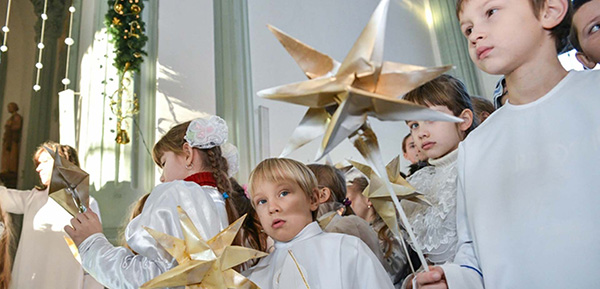
    Historically, at different times Belarus was a Catholic country as well as an Orthodox country, many families today are mixed according to their religious beliefs, that’s why Belarusians often celebrate Christmas twice. Preparing for the Catholic Christmas starts with the period of Advent, the time of prayerful fast, when it should be thought of purifying of soul and make doings of charity. Children wait impatiently the 19th of December, the Day of Saint Mikalay (Santa Claus), who brings presents. On this day in the Catholic churches children play Christmas performances and take a fruit and sweets’ festive table. At children’s homes the presents from Santa are waiting them under the Christmas tree. On Christmas Eve Belarusian Catholics gather their families at the festive table with 12 meatless meals (according to the quantity of the Apostles). The table is covered with white tablecloth (the symbol of purity), underneath of which is put a cluster of hay (the symbol of Christ’s birth in simple corral). On the table there are should be on one table set more than members of the family, for God in the image of a stranger may knock at the door and ask for come in. In the centre of the festive table Belarusians light a candle, the head of the family reads a prayer and then shares with every family member the oplatka (Lenten Christmas bread). During the process of sharing everyone wishes each other the good and God's blessings for the coming year. Traditional Christmas dishes in Belarus are porridge with raisings, jelly and dried fruits. After the festive dinner the whole family goes to a church for the Christmas Mass. The Christmas period lasts till the 6th of January and is accompanied by the carols.

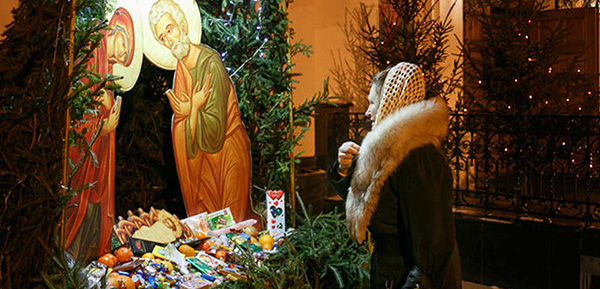
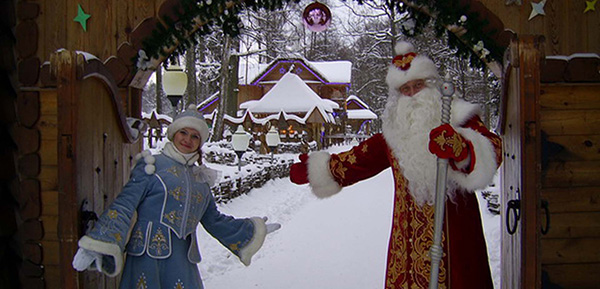
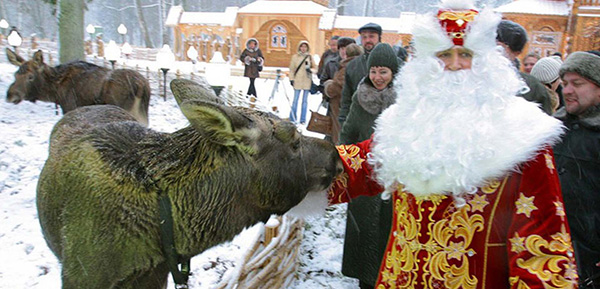
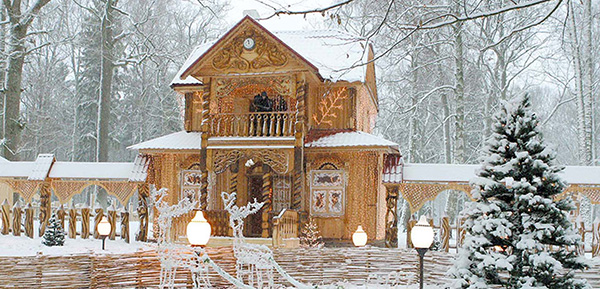
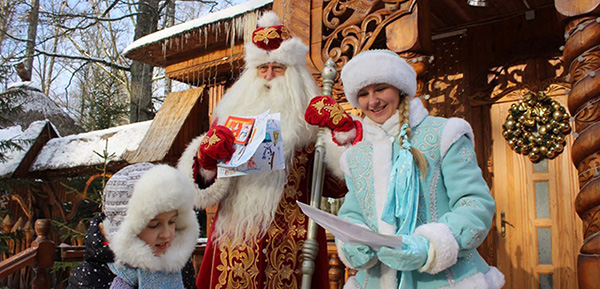
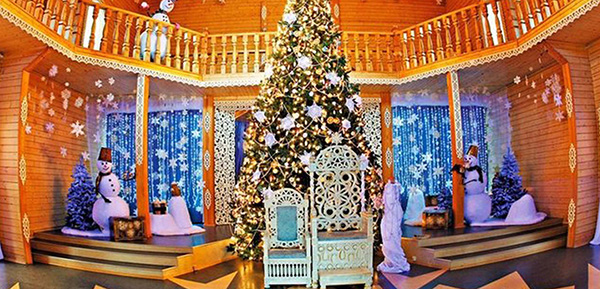
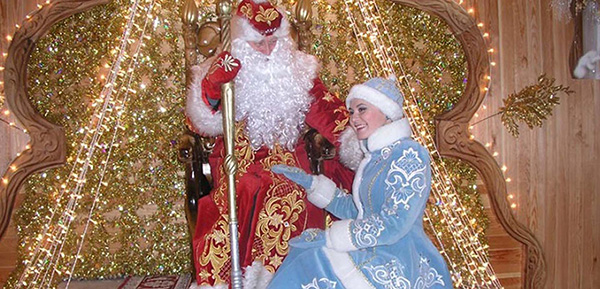
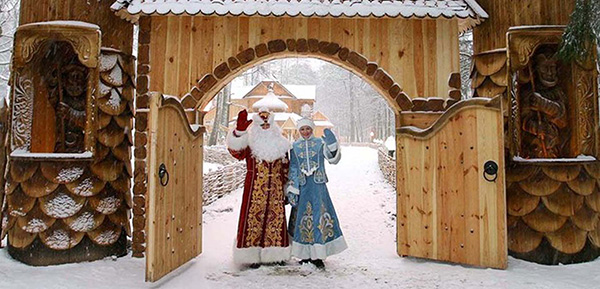
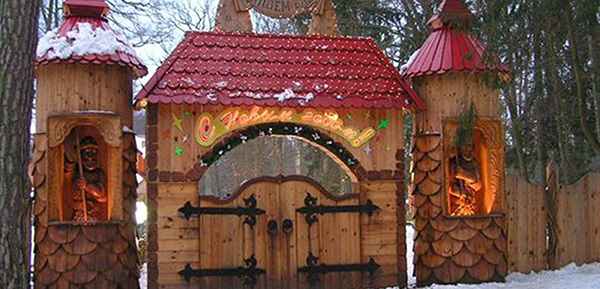
    Orthodox Christmas Eve is on the 6th of January. The preparing time is very similar with the Catholic traditions in Belarus, but with the difference that the festive table abounds with meat dishes and is had after the Christmas Mass. Orthodox Christians do not celebrate the Day of Santa Claus, but since the Soviet times Belarusian children wait for Father Frost and Snow-maiden (the images of Russian fairy-tales), who are main characters of the coming New Year. The Residence of Father Frost in Belarus is situated in Belavezhskaya Pushcha, the most ancient European forest. December and January are the best time for visiting Father Frost there. During the Christmas period the Belarusian Post Office offers the services of Christmas and New Year parcels for children, that are delivered by the costumed as Father Frost postmen. This service came to taste for parents, whose children write letters to Father Frost and wait for their wishes to come true.

    Since the 16th century Belarusian Christmas traditions were known for street performances of the Batleyka theatre (it comes from the main Christmas city’s name “Bethlehem”). They were the plays with the help of puppets in special wooden boxes, that told people the story about the birth of Jesus Christ. Nowadays the tradition of the Batleyka theatre is being reconstructed in Belarus, and it is a must see show here during your Christmas Holidays tour.

    Customs &Traditions tours


    Belarus has its original cultural identity, which goes back to the times of the Grand Duchy of Lithuania, when Belarusians were called Litvins. We offer you to get acquainted with Belarusian traditions and customs, take part in traditional entertainments, listen to folk songs and learn to dance Belarusian dances, watch craftsmen at their work and even partisipate in making handcrafts of Belarusian souvenirs, we invite you to dine Belarusian cuisine and drink Belarusian beverages and hooch.

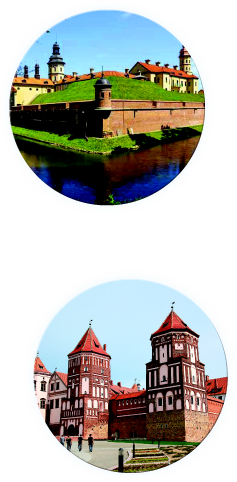
    Cinema Territory in Strochitsy Skansen Museum

    BOOK NOW

    Belarus is not the country of well-developed cinematograph, but it is a good playing field for foreign film makers. Many Russian films and series and especially historical ones are produced in Belarus. In Strochitsy Skansen Museum near Minsk there is a vast territory of 153 hectares with the authentic folk villages of the 18-19th centuries. The folk houses and other buildings of that epoch were transported here from various Belarusian provinces and nowadays create a unique authentic atmosphere in one place. Like typical Wild West decorations in Hollywood film making studios, folk villages in Strochitsy Skansen Museum are typical natural decorations for slavonic films. All attributes of life in the villages are original, that helps create certain reality in cinema. Usually popular local folk festivals such as Kupalle, Maslenitsa, Calling for Spring, Pulm Sunday or Shchadrets (Christmas carols) take place here. The festivals are organized as great shows with folk fairs and traditional rites, that immerse tourists into the action. Here you can buy original Belarusian souvenirs, selling by craftsmen, and taste original Belarusian goodies and dishes. The territory of Strochitsy Skansen Museum is divided into three provinces: Central Belarus, Dnieperland and Lakeland. Every province has its own ethnic feature and history. There are nearly 40 historical objects in the Museum. As the territory of the Museum is rather large, that’s why it’s better to take a bicycle or a horse-drawn carriage ride. But if you prefer more capturing adventure, we advise you to take an avia tour over the Museum or a water excursion on a comfortable boat to view picturesque surrounding landscapes and water expanses of the local lake, created by the last glacier. For sure, visiting Strochitsy Skansen Museum will impress you much, and who knows, may be this travel will inspire you to make a film or at least a film of your incredible trip to the authentic Belarus.

    OZ

    Upside Down Folk House in DUKORA

    BOOK NOW

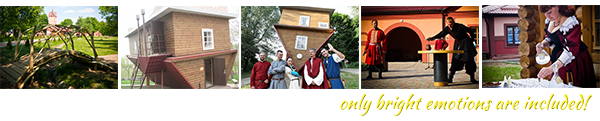
    “Dukorski maentak” (Dukora gentry estate) is one of the most unusual sights of Belarus. It is a historical and tourist center, founded in 2015. The ancient gate tower of the early 19th century miraculously survived in WW2 starts our journey. Here you will be told about the life of the Belarusian gentry and family secrets of the most famous dynasties of the past. One of them was Oginski dynasty who owned Dukora many centuries ago. You will see a flipped upside down house, where everyone can test its endurance. Magical forest of fairy tales, zoological garden, rope town for children, street of artisans, 400-year old oak, everything here creates a special atmosphere of the noble past. Come to Dukora and feel yourself the part of the story!

    DRA

    Folk Crafts & Rural Life Museum in DUDUTKI

    BOOK NOW

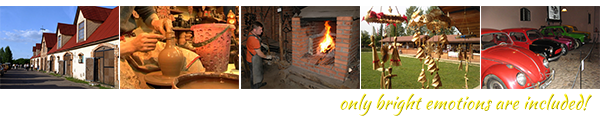
    The Museum of Folk Crafts & Rural Life is situated in the picturesque place of Dudutki near the river Ptich. The Museum is designed as a gentry estate of the 17th-19th centuries. Various folk crafts’ workshops, folk houses, stables, taverna and other estate facilities are situated on the territory of 162 hectares. The Museum first of all keeps the traditions of Belarusian folk crafts technologies, that’s why here you can see craftsmen at their work. At the bakery workshop you’ll see how a loaf is being baked; in the pottery workshop you can even try potter's skills of yours; you can be trained a blacksmith’s skills and have a chance to shape a horse shoe with your own hands. In the windmill of the 19th century you’ll see of how grain is being turned into flour. The visitors of the Museum are offered to taste typical local food such as lard, bread, onions, salted cabbage, old gentry vodka (hooch), traditional snacks, bread, cheese, butter and herbal tea. All treats are produced in the Museum’s workshops according to old recipes, using only natural ingredients. The other significant feature of the Museum in Dudutki is the collection of rear retro cars of the 20th century, that is one of a kind in the whole country. Horse riding or walks in a carriage will complement the feeling of being in the countryside. Embark an adventure to the old times with the Museum of Dudutki, and you’ll get an incredible weekend in the best Belarusian traditions!

     DUD

    Entertaining Resort in KAROBCHITSY

    BOOK NOW

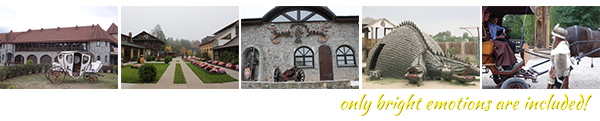
    The Resort is located just 5 km away from the city of Hrodna. It is the best place to have an amazing weekend with friends or children. Fresh air on the bank of the marvelous pond and freshly prepared food on the fire in front of you will create for you -the atmosphere of a home in a countryside. There is an excellent park zone, stables and horse riding school for children, guerrilla (partisans) camp and a zoo on the territory of the resort. The Resort maintains Belarusian customs and traditions, organizing numerous cultural festivals. Here you also can taste the dishes of Belarusian cuisine. The restaurant and the cafe, which are designed and constructed as a Medieval Castle, the service staff dressed in the historical costume, the statues of animated cartoon’s heroes and the presence of king’s brougham enhance the feeling of being in a fairy tale. Old times coaches with cab drivers will take you to any part of the resort. A big children’s playground with a pirate ship, a castle and a big dragon will capture your kids for the whole day. Entertaining fairytale performances and shows are regular things here, and if there is no fairy tale in your life, come to Karobchitsy Entertaining Resort and you’ll find yourself in the center of a dream’s reality!

    KAR

    The Art of Folk Weaving in BEZDEZH

    BOOK NOW

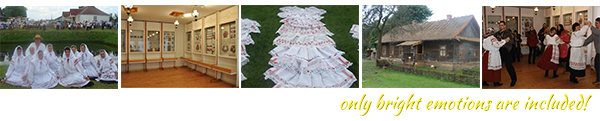
    The Museum of Folk Weaving “Bezdezh Apron” keeps the unique collection of weaving, clothing and arts and crafts of the Western Palesse region. It has over 200 homespun aprons, none of which repeats the previous one. The exhibition demonstrates the interior of a Belarusian peasant house, decorated with peasant household items and patterns of folk clothing. One of the show-rooms is fully occupied by the exposition of aprons. If you are interested in the art of weaving, the “Bezdezh Apron” Museum is the very place you should visit and take a part of art in the peace of souvenir with you. The vast territory of the Museum is designed as a peasant dwelling house with outbuildings, courtyard and a farmstead, garden and a pond. The visitors will be offered to taste western Belarusian cuisine: home bread, lard, homesalted cucumbers, mushrooms from the barrel, makuha, draniki, nalistniki, potatoes in their jackets and many others. Entertaining part of the excursion includes a master-class of folk dancing for tourists and joyful folk singing. For sure, having come to Bezdezh, you’ll enjoy a day of a Belarusian peasant’s life, full of mirth, humor, songs and art!

    BEZ

    Slutsk Belts Manufacturing tour

    BOOK NOW

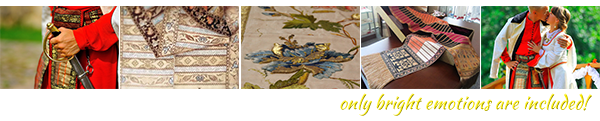
    Slutsk belts are the national treasure of Belarus. They were a part of man's dress of priviledged gentry of the Polish-Lithuanian Commonwealth. Wearing Slutsk belts tied on the weist was the mark of nobility and wealth of their owner. The origin of Slutsk belts comes from the Osman Empire and Persia. First belts manufacturing appeared in the Commonwealth in 1758 in Slutsk. It was founded by Mikhail Kazimir Radziwill, the great Lithuanian getman. He invited there Turkish and Persian weavers, who trained local apprentices, and so the technologies were adopted. The belts were weaved only by men, it was considered to be a good luck. Women were not allowed to the process of manufacturing. Every belt was weaved of thin silk, golden and silver threads, had the lenth of 2-4,5 metres and the width of 30-50 cm. All sides of the belts were front sides. Usually the belts were belateral, but the most precious ones were four-sided. The patterns were designed by artists and contained oriental and popular local tunes, but all the time unique and exclusive. The cost of the belts varied from 5 to 50 ducats (15-150 golden roubles) and in some cases could reach 1000 golden roubles, that was equal to the annual income of the Commonwealth's officer. Regardless the belts were produced in Nesvizh, Warsaw, Krakow and other cities, they were popular as Slutsk belts, because Slutsk manufacturing was the most influencial and skilled in the state. Since the end of the 19th century Slutsk belts became objects of collecting. Original belts nowadays are in many world's museums as well as in private collections. Belarusian scientists studied old manufacturing technology of the belts and invented a unique weaving machine, that helped recreate exactly manufacturing process. 250 years ago one weaver could produce 2-3 belts in a year. Modern technology allows to produce 1 belt in 60 hours. The materials and techniques of the replicas are the same as in the 18th century. Because of the complicated manufacturing process Slutsk belts replicas are very expensive, but as the masterpieces of art they can be good investment. Their cost varies from $500 to $2500. They are produced only on pre-order. You can see original belts in the National Art Museum of Belarus in Minsk and in the Museum of the history of Slutsk belts in Slutsk. In Slutsk you can also buy replicas of the belts and other related souvenirs. Come to Belarus, touch the history of art and feel what is to be a Lithuanian magnat!

    SLB

    Wild & Adventure tours

    Camping
    Kayaking / Canoeing / SUP surfing
    Cycling / Quard biking tours
    Horse riding
    Moto hang-glider / Halicopter / Parachuting / Skydiving
    Fishing / Hunting
    Picnic / Barbecue tours
    Skiing / Snowmobiling tours
    Russian banya (bath)
    Swamp safari
    River Cruises

    Adventure: Flying like a bird

    BOOK NOW

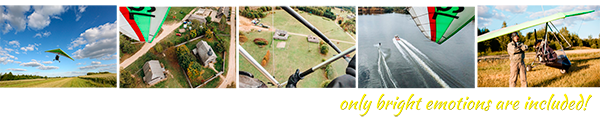
    Face caressing wind, playful glare of beams and intoxicating feeling of freedom... Moto hang-glider is smoothly moving along the slope of heaven, allowing you to forget about fear and enjoy the views. Roofs of houses scattered along the Ptich like bright beads, wooden and immersed in the greenery constructions of the 18-19th centuries of Skansen Museum, multi-story houses of Minsk and much more are underneath your wings. All you need is just stand still and reverently consider beautiful scenery.


    b10


    Adventure: River Cruises
    7 days’ Cruise on the Cruise Liner

    BOOK NOW

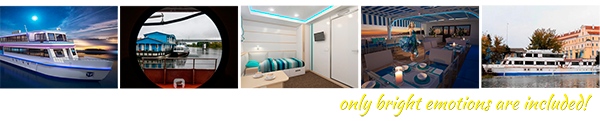
    First Belarusian Cruise Liner “Belaya Rus” has been launched on water in Brest. The Liner will bring tourists via the river Pripyats from Brest to Mozyr and back during the 7 day’s voyage. The tourist route is called “The Pearls of Palesse” and includes visiting the cities of Brest, Kobryn, Pinsk, Turov and Mozyr as well as terrestrial cities of Motyl and Dostoevo. Floating on the Liner by the old route from the Vikings to the Greeks you’ll get acquainted with the sights of the most significant Belarusian river ports, having existed since the 10th century. You’ll enjoy excursions over the ancient cities and know more about Belarusian customs and traditions. Picturesque landscapes of Belarusian Palesse will impress you much, creating a wonderful atmosphere of a beautiful adventure. The Cruise Liner can accommodate 35 people. It has 16 cabins of economy, standard and luxe class and provides customers with “all inclusive” service (4 meals a day/excursions/transportation/ entertainment programme). Economy cabins accommodation includes one bed, TV-set, refrigerator, safe, bath rooms of the common use. Standard cabin besides has one more bed, conditioner, bathroom. There are two luxe class cabins in the Liner, that are two-roomed apartments with all conveniences. These apartments are called after the names of the famous Belarusian poets of Yanka Kupala and Yakub Kolas. Here in the cabins you can also find their books to read and to touch Belarusian culture. First voyage starts in April, 2017. The cost of all-inclusive tour varies from 400$ till 1100$ per person. The booking for cruises has started. Take a chance to have this tour, BOOK it now!


    r1


    River Tours & living in the Floating Hotel

    BOOK NOW

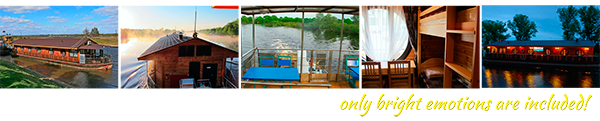
    We invite you to take an incredible voyage on the river Prypiats in the floating hotel "Palesse". Picturesque banks, fresh air and shining expanse of river's water will calm your senses and harmonize your emotions. You will enjoy dinner on the open deck, and even do fishing. Per your request the fish you caught can be cooked right here by the cook. Also an incredible picnic on the bank of the Prypiats can be organized for you by the hotel’s team. The hotel's route starts in the ancient city of Turov and goes down the river through several Belarusian towns and back. During your voyage you’ll get acquainted with the interesting history of Turov, one of the oldest and very important trading river ports of Europe, you’ll visit the most significant tourist places of the area and will touch to the legend of famous Turov miracle-working Crosses. The hotel can accommodate 16 tourists at the same time. The accommodation of the hotel includes 8 comfortable cabins with all conveniences and 2 cabins of luxe class. You can book a cabin in the hotel with the river cruise and excursions or without them and for any time you need. The cost starts from 25$ per day for a person. Living in the floating hotel can be the best alternative for river cruise for those who prefer create their own tours.


    r2

    Adventure: Quard biking & Picnic

    BOOK NOW

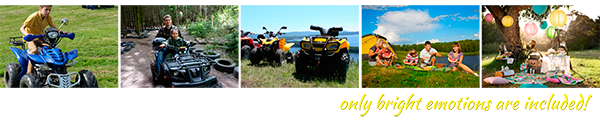
    Would you like feel adrenaline in your veins? Just listen to how your quard bike’s motor is roaring. You are racing through the endless expanses of beautiful Belarusian nature into the wind! What can be better than the feeling of real freedom? The best is just having your best friends or family at these moments with you! One for everyone, and everyone for one! And then, at a lake side, you stop your flight to have a joyful picnic on the picturesque bank. And then, you understand: happiness exists! Come to Belarus and feel it. Extremely recommended for romantic couples ;)

    q1

    Wild-Wild Belarus

    BOOK NOW

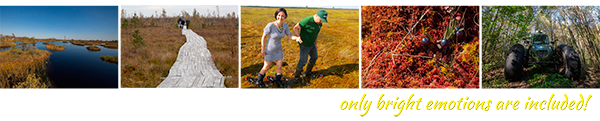
    Have you ever discovered unexplored and rarely gone paths before? Wild nature inspires, stirs your mind and by its beauty and perfection brings you closer to the Creator. Wild nature of Belarus is very unique. It is the vast territory of impassable swamps, that are considered being the lungs of Europe. Here and there the swamps are dangerous places, hardly possible to get out. But for tourists they built mounted trails over the swamp’s surface, that are absolutely safe. Walking on the trail you’ll enjoy wild nature’s landscapes. Here, on Belarusian swamps, you breathe the best and the purest oxygen on the Earth. You and your camera will like rare species of plants and birds, that inhabit here. For those, who like feel adrenaline in their veins, there are routes to go in swampshoes in assistance with an instructor or to take a safari tour in swamp buggies.

    s1

    Russian Banya

    BOOK NOW

    Bath traditions in Belarus came from Russia. Rassian banya (a kind of steam bath) is very popular here. Banya is a small room or building with dry and wet heat sessions. The steam and high heat make the bathers perspire. At Russian banya they use special bath brooms called in Russian "veniks". These brooms bound of bundles of twigs and leafy branches usually are made of birch or oak trees. The veniks are dipped into cold water and then are used to smack briskly over the whole body. A special person called banschik is responsible for this procedure. But usually people don't need banschik's help because groups of friends, taking banya, are able to smack each other with veniks. When you are in Belarus, at least one time, do not take a shower, do not take widespread SPA, but take Russian banya! You’ll enjoy your body and feelings after this healthy procedure. Banya on the route of your wild tour will become one of the most exciting adventure!

    rb1

    Camping and Wild tours

    BOOK NOW

    Camping is very popular in Belarus. The great privilege for tourists here is that Belarusian forests, lakes and rivers are free for camping. Fresh open air near the river bank or fir forest fragrance will fill your emotions with harmony. Beautiful landscapes will make pleasure for your eyes. You can join to the group of tourists and take kayaking, canoeing or SUP surfing tours. And then after long swim, all the group camps somewhere in a picturesque place for making barbecue and singing and talking near the fire. Romance is everywhere! It’s easy to make new friends!
    Fishing is the other great opportunity here. It is available almost everywhere. Belarusian lakes and rivers are rich for fish and crayfish. Hunting here requires certain permissions and quotas, but there is nothing impossible! Horse riding or cycling can diverse your wild tour adventures, giving you sense of flight and freedom. For sure, camping in Belarus will become one of your most interesting and impressive vacations!

    c1

    SPA & Medical Treatment tours

    Foreign tourists can combine travelling and recreation with high-quality treatment and recuperation at Belarus's best healthcare facilities. Many foreigners come to Belarus for a complicated surgery or in-hospital treatment.

    There are several reasons behind it:
    1). Highly-qualified medical professionals
    2). Exceptional quality of medical services and advanced equipment in hospitals
    3). Cutting-edge medical technologies and progressive treatment methods
    4). Reasonable prices for medical services
    5). Convenient geographical location of Belarus in the center of Europe and well-developed transport communication
    6). Mild climate, that does not require acclimatization and that contributes to faster rehabilitation

    Medical services and treatment available in Belarus for foreigners:
    Surgery
    Dental
    Cardiology
    Oncology
    Plastic surgery
    Neurosurgery
    Ophthalmology
    Otorhinolaryngology
    Traumatology and orthopedics
    Reproductive technologies (IVF)
    Organ and tissue transplantation
    Rehabilitation
    and others

    There are also a number of SPA resorts in Belarus and in Minsk in particular.

    All medical or SPA services are available on appointment/booking.

    Nature’s Photo Shooting tours

    Belarus is a very beautiful country, that harmoniously combines the most interesting cultural and historical heritage with wonderful gifts of nature. Ancient forests, beautiful lakes and fields are the most attractive to the eye of a photographer. Because of its natural landscapes Belarus is very often compared to Switzerland. Belarus is the Motherland of white storks, which population here is great. And European aurochs, the last ones in their kind, that inhabit in Belavezhskaya Pushcha, are the visit card of the country. For sure, nature's photo shooting in Belarus will enrich your collection of impressive photo pictures.

    Photo Shooting in BELAVEZHSKAYA PUSHCHA
    (forest, UNESCO heritage)

    BOOK NOW

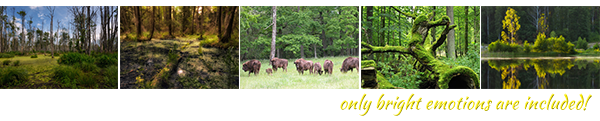
    Belavezhskaya Pushcha is called after Polish settlement of Belavezha (Białowieża). The Pushcha is the territory of a relict forest, which in old times covered most of Central Europe. Gradually the forest was cut down, but on the territories of Belarus and Poland it was saved. Noteworthy, that the Pushcha was protected by its owners since the Middle Ages. So the Grand Duke of Lithuania and Polish King Jagaila in 1406 prohibited hunting big game here. Today Belavezhskaya Pushcha is under the protection of Belarusian state and is the vast reserve of flora and fauna, where hundreds of rare and endangered species of birds and animals live and breed. The air of Belavezhskaya Pushcha is filled with the fragrance of flowers, pine and spruce resin, fern, wild rose, the smell of forest berries and mushrooms. Giant oaks, ash-trees, maples, pines and spruces are the great heritage of old times. Some of the trees are of 450-530 years old and have the height of 40 meters. The king of that forest is European aurochs, whose population here is the only one in the world. The animal is the symbol of strength and power and nobility, all that connects present days’ Belarus with the former power and glory of the Grand Duchy of Lithuania. That’s why you can often see aurochs’ image as a logo of Belarusian sport teams. Walking the Pushcha’s trails, you can meet the family of aurochs in natural habitat. Also you can found here deer, wild boar and other hoofed animals, lynx, marten, polecat and even a wolf. Near rivers and lakes you can meet otter, mink, beaver and other forest dwellers. In 1992 Belarusian part of Belavezhskaya Pushcha was included by UNESCO in the List of World Heritage. Today Belavezhskaya Pushcha is the museum of nature and is open for visitors. For professional photographers they organize special routes, where you can take unique and extraordinary photos of wild and rare European nature, which looks now almost as it looked many centuries ago. Belavezhskaya Pushcha is also the Residence of Belarusian Santa Claus (Father Frost). His estate is located near the highest spruce (natural Christmas tree) in Europe. Be sure, your journey to Belavezhskaya Pushcha will become picturesque and unforgettable!
    niz 1

    Photo Shooting in BEREZINA BIOSPHERE RESERVE
    (the Ramsar site)

    BOOK NOW

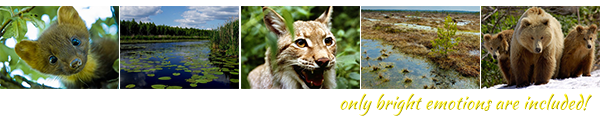
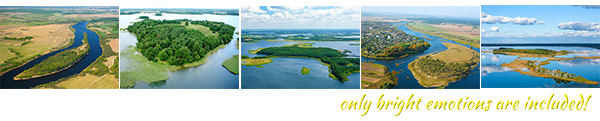
    Berezina Biosphere Reserve is situated in the north of Belarus and is the largest swamp area in Europe. Berezina Biosphere Reserve takes its name from the Berezina, the longest river in Belarus, and together with the Western Dvina, the Svisloch, the Druts and the Dnieper it creates the water system, which has been connecting the Baltic Sea and the Black Sea since the 10th century and was worldwide known as the most important trading route “from the Vikings to the Greeks”. The square of Berezina Biosphere Reserve is 852 sq. km. and contains endless forests, large swamps, meadows, rivers and lakes. It is the vast territory of wild nature! Here you can find brown bear, elk, wolf, lynx, European aurochs, deer, roe, beaver, hare and many others. The most significant dweller of the Reserve is golden eagle (one of the largest eagles in the world), whose wingspan up to 2.4 meters. The other rare birds here are black stork and gray crane. In spring and summer seasons the Reserve organizes special tours for observation of animals and birds in their natural habitat. In 2010 Berezina Biosphere Reserve was included in the list of Ramsar sites as the most important swamp area for birds protection. The other routes for tourists are: walking and bicycle tours, safari tours, horse riding, kayaking and others. For photographers they have the observation deck of 12 meters height to take excellent panoramic photos. For children it would be interesting to go by the Trail of Discoveries of the arboretum, play at the rope town or visit the zoo. Hunting tourism is also developed in Berezina Biosphere Reserve, it is organized beyond the boundaries of the Reserve and within a special hunting zone. They support foreign hunters with all necessary documents. Visit Berezina Biosphere Reserve and enjoy the wonderful opportunity to touch the real nature and breath the pure air!
    niz 2

    Photo Shooting in the National Park
    “THE BRASLAW LAKES”

    BOOK NOW

    The Braslaw Lakes is the water area of Belarus of more than hundreds of lake and river islands, the significant portion of the country’s islands. The Braslaw Lakes are situated in the north of Belarus (Vitebsk region). They were created by the last glacier more than 15,000 years ago. The boulders left by the glacier can be found here and there on the islands. The biggest boulder is on the western part of the bank of the Strusto lake and has the size of 4.5x4.5 meters and the mass about 40 tons. The territory of the Braslaw Lakes in the 10-13th centuries was on the route “from the Vikings to the Greeks”, that’ s why some of the nearby settlements keep the history of those times. So in the village of Maskovichy the archeologists discovered a Viking settlement and a place of a significant number of runes and images dating to nearly 900 years old.Today the Braslaw Lakes area is a well developed tourist region with a number of sand beaches and purest lake water.

    The Islands in the Braslaw Lakes:

    The Chaichin Island

    The second large island in Belarus is the Chaichin Island. It has the square of 1.6 sq.km. It is situated in the centre of the large and the picturesque lake Strusto (the Braslaw Lakes area). Till the lowering of water level in the 1930s its northern part was a separated isle called the Yurkovo. The Chaichin, the Yurkovo and the Shova created a small archipelago, where the village Strusto Island was situated. In 1931 the population of the village was 27 people, who lived in 6 houses. Today the island is uninhabited. The beauty of the Chaichin Island is in its meandering coast line with deep bays, narrow isthmus and the sandy beaches. On the island there is a small inland lake, which for ages has been rich for crucians. The hills of the Chaichin are replaced by lowlands, covered with pine forests, juniper bushes up to 3-4 meters in height, and a birch grove, where atypical for Belarus Karelian birch grows. You can see the Chaichin Island and the other 7 islands of the Strusto lake from the observation desk “Mayak” (lighthouse)

    The Turmas Island

    The Turmas Island is situated in the lake Snudy (the Braslaw Lakes area). The Snudy lake has been one of the most fish. Of a special demand were pike, smelt and selyava. Till the end of the 19th century they caught a great number of crayfish, which were delivered in wagons even to Prussia. The Turmas Island was inhabited by three families. They reached the mainland on boats, and on foot and on sleigh in winter. Sometimes, in the off-season it was impossible to reach the opposite shore on thin ice, and the islanders for a few weeks were cut off from the mainland. You can see the Turmas Island and the other 11 islands of the Snudy lake from the observation desk “Mayak” (lighthouse).

    The Castle Island of the Drisvyaty lake

    The Castle Island of the Drisvyaty lake (the Braslaw Lakes area) was known since the 11th century. In the times of the Polotsk principality there was a settlement for nearly 400 people on the island. The island with the fortified castle on it many times was mentioned in chronicles of the Grand Duchy of Lithuania in the 15-16th centuries. Near the castle there were a landlord’s yard, a market place, three streets and a church. The island was connected with the mainland with a help of two bridges. In the 17th century the castle was ruined. For many years archaeologists had been working on the island, studying the cultural stratum of the settlement of the Polotsk principality´s and the Grand Duchy of Lithuania´s periods, and during the excavations they discovered many interesting finds, which nowadays are kept in the Museum of Braslaw. The Drisvyaty lake is the area of relict animals, who survived since the last glacier. So a tiny amphipod crustacean Pallas according to its form reminds a shrimp, but its length is just 1.5 cm. The crustacean inhabit on rather a big depth, where the temperature is equal during the year.

    The Castle Island of the Ikazn lake

    The Castle Island of the Ikazn lake (the Braslaw Lakes area) in the end of the 15th century was owned by Braslaw headman Jan Sapega, who started the construction of fortified castle here. Defensive walls of the castle, built of stone and brick, clay ramparts with wooden structures and two towers towered up above the wooden buildings of the town. In the 16th century the castle was the center of thelarge possessionsof the Sapegas in Braslaw. The significant part of the island was occupied by the under-castle, surrounded by an earthen rampart. Near the walls of the fortifications there was an artificial pond for fish, coming from the lake. The island was connected with the mainland with a help of a floating bridge, built on special shuttles that in case of danger could be quickly hidden under the water. The castle was destroyed in the beginning of the 18th century during the North War. There is a legend that says that the enemy couldn’t enter the castle for a long time and were ready to raise the siege, but suddenly a cow passed the hidden bridge and then enemies broke into the castle. The other story tells us about the buried treasure of the 17th century that lies at the bottom of the lake not far from the Castle I

    The Monastery Island

    At the beginning of the 19th century on the Monastery Island of the Nespish lake (the Braslaw Lakes areas) were head the sounds of the church bells and the masses were served. Braslaw friary with a church and dwelling buildings were built on the island in the 15th century. The lake and the nearby settlements belonged to the friary. The island was connected with the mainland with a help of two bridges. Near the main bridge there was a hostelry. The pilgrims came to the island to pay homage to the miraculous icon of the Virgin Mary of Braslaw, Lady of the Lake and the patroness of all Braslaw area. Becauseofhugequantityof people the masses were served in the field, right on the bank of the lake. In 1832 the monastery was burned in the terrible fire, but the icon saved. Accordingtothelegendit was found on the nearest Saint Island, where the Saint Cross had been installed since the existence of the monastery. Theiconwasbroughtfrom the Saint Island to the altar of the Braslaw Catholic church, where you can see it nowadays. On 24, August Braslaw celebrates the day of the Virgin Mary of Braslaw, Lady of the Lakes.
    The other Belarusian Islands:

    The Du Island

    The Du Island is situated in the lake Asveya in the north of Belarus (Vitebsk region). It is 5 sq. km. and is the largest island in Belarus. The ancient name of the island was left by the Finno-Ugric tribes and meant "lake". The other version says there was a Baltic settlement on the island with its own parish and the church of Virgin’s Nativity. From the Baltic languages of those times “Du” was translated as “two”. There are two mountains on the island: Gorodok and Perunovka. Till 1970 the island was inhabited. There were nearly 50 houses, a shop, a farm, a club and a diesel substation here. People got to the island on boats, on foot or on a sleigh on the ice, and after the WW2 on the ferry. Today the island is a wild one. Only old cemetery reminds of human dwelling here. The island has been recognized the nature reserve, inhabited by wolves and elks. It has become a good place for watching birds.

    The Ghost Island

    Floating island is the other sight of the lake Asveya. Being not attached to the bottom it moves slowly along the surface of the lake with the average speed of 1-1.5 km per hour, depending on the wind. The locals called the island a “Master”. The form of the island reminds a nest. Instead of soil the bottom is done of bound algae, roots and branches. Walking on it is possible, but dangerous. Flexible trees and shrubs are places for birds’ nesting. Every year the island grows in size, because when floating it gathers everything on its way, converting the water into swamp. Fishermen, apparently in revenge for the ruined network, called this island a “Ghost”. They say that at night on the deck of the branches a weightless and rather nervous ghost is walking and screaming, that frightens people and fish. According to fishermen, the fish here indeed do not bite. But the locals say that the “ghost” in reality are muskrats, living here.

    The Castle Island of the Myadel lake

    The ancient town of Myadel (or “Woodland” in the language of the Baltic tribes) appeared in the island about the 10-11th centuries. It was surrounded by tall wooden walls (later the walls were made of stone) to keep the defense from the siege of crusaders. In troubled times the people from other isles could find a protection behind the well-fortified walls of Myadel. However, in the first half of the 15th century the plague forced people to leave the prosperous town. Later the town was rebuilt anew on the mainland. The Castle Island was connected with the name of Bona Sfortsa, the Grand Duchess of Lithuania and the Queen of Poland, who received the local areas with the lake as a present from her husband Zhihimont (Sigismund) the Old. According to the legend, the contemporary Myadel used to be surrounded by three majestic castles, every one of which was built on a separate isle. They were called the Myadel, the Naroch and the Myasto isles. They say the Myasto isle was the permanent residence of the Queen.

    The Jew Island

    The Red lake in the Palesse, which in different times was called the Prince lake of the Jew lake, is shrouded in legends and stories. One story tells about a Jew, who lived nearby the lake and maintained his own tavern. One of the noble princes fell in love with the daughter of the Jew and offered to build a castle on one of the five islands. The best builders of Slutsk obeyed prince’s order, but the spring flood didn’t spare their efforts and destroyed the strong placing. Since that time the lake was called the Jew. The other legend says, that in the castle the prince Olelkovich, one of the Slutsk princes, was imprisoned. The older brother hated the younger, and sent him to the island. The death to the prisoner was brought by the very flood that destroyed the castle in spring.

    The Stefan Batory Island

    Fortified in old times island, with which the history of Disna settlement began, lies at the confluence of the Western Dvina and the Disna. During the times of the Polotsk principality the island was called Kopets, that meant earthen fortifications. In the second half of the 16th century Stefan Batory, the Grand Duke of Lithuania and the King of Poland, started the construction of the fortified castle here. The island, along which the castle with nine towers grew up, used to be called the Old Castle Island. During the 16-18th centuries the castle played the role of a fortified fortress and a customs house, where trading goods were being checked. There were storehouses on the island. They were full of lard, bread, wax, honey and fish - all the goods, that Disna merchants brought to Riga. Having survived after the war of 1812, the castle was totally destroyed by the fire in 1882. Today the Stefan Batory Island is covered with castles ruins. By the way, right near the island, in the place of the rivers confluence, there is the middle of the Western Dvina.
    niz 3

    Photo shooting in the National Park
    “NAROCHANSKY”

    BOOK NOW

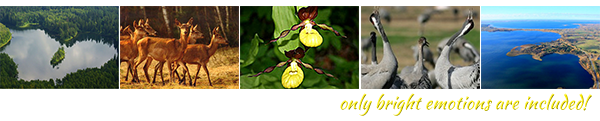
    The National Park “Narochansky” is the resort area of Belarus famous for its healing mineral springs, pure lake water and very picturesque landscapes. It is situated in the north-west of the country and is a part of Belarusian Lakeland. There are 43 lakes on the territory of the Park. They were created by the last glacier 15,000-20,000 years ago. The pearl of the park is the Naroch lake, that is the largest lake of Belarus. Its square is 79,6 sq.km. About 48% of the park is covered with picturesque pine and birch groves. The flora is rich of variety of mosses, lichens, mushrooms and algae.The most beautiful Belarusian orchid “lady's-slipper” is growing here. You can find here European red deer, wild boar, elk, roe, raccoon dog, badger, marten, mink, otter, beaver, muskrat and other animals. Nearly 35 species of fish inhabit in the waters of the park, that’s why the Park is very attractive place for fishermen. The camping is also very popular here. There are 16 tourist equipped tourist parkings on the banks of 9 lakes. The Park offers walking and bicycle tours, kayaking, yachting, hunting, fishing, diving and others. For photographers it will be interesting a sky walk on a helicopter to take panoramic photos from the height of the bird's flight.
    niz 4

    Photo shooting in the National Park
    “PRIPYATSKY”

    BOOK NOW

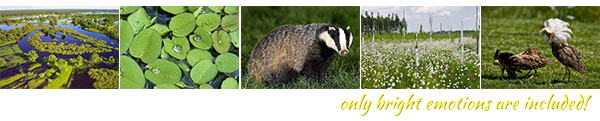
    The National Park “Pripyatsky” is the area famous for its wild Belarusian nature and impassable swamps, that have no analogues in the world. According to the western tour operators the National Park “Pripyatsky” can easily compete with the famous National Park “Everglades” in Florida, USA. Indeed it is difficult to collect in one place such a diversity of animals, birds, plants, meadows, forests, wetlands and water bodies, which are available in the National Park “Pripyatsky”. The Park is situated in the south of Belarus in the center of the Palesse swampy lowlands, which are usually called “the lungs of Europe”. It is a paradise for bird watchers and for the lovers of birds. The Park organizes special tours for tourists and photographers, where they can observe birds and animals in their natural habitat. For the observations they use water routes, pedestrian or road routes, ambush, special observation decks with the opportunities for photographers to take pictures of wild life. The rich hunting and fishing grounds of the Park attract hunters and fishermen from all over the world. During the tour you’ll also get known with the unique customs and traditions of Belarusian Palesse.
    niz 5

    Busel Land

    BOOK NOW

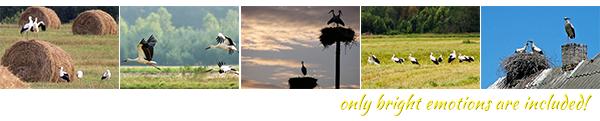
    For sure, you’ve heard much about flamingo lands, but you cannot even imagine that Belarus is the land of large population of white storks! White stork in Belarusian is called “busel”, that’s why busel is the symbol of the country. Busels nest in Belarus from March till September. According to scientists, they come here from African Sahara Desert. To see the beautiful royal storks and take their photos you don’t need to visit special area of Belarus, just take a car and go on a highway to the wide expanse of fields: the storks are everywhere! Busels like to nest on rooftops of the village houses or on poles of electricity transmission lines, that’s why it’s a usual phenomenon here. For ages the locals have known, it is a great luck and grace, if busel nests on the roof of your house, that’s why this bird here is in great reverence. Also, every child here knows, that stork brings children, for this is one more reason to take care of the stork’s population. August is a special time for taking photos of busels. When the harvest time comes, you can see hundreds of storks, walking in the freshly cut fields near combine-harvesters. White storks are very friendly birds, and here in Belarus we know it very well. Come here and see it with your own eyes!

    niz 6

    We are at

    facefook twitter in yt

    Join us!
     

    CONTACT US

    by phone:

     +14078019909

    skype: Belarus Direct

    via e-mail:

    info@belarusdirect.com

    right home